

Why “texting” means WhatsApp Business today
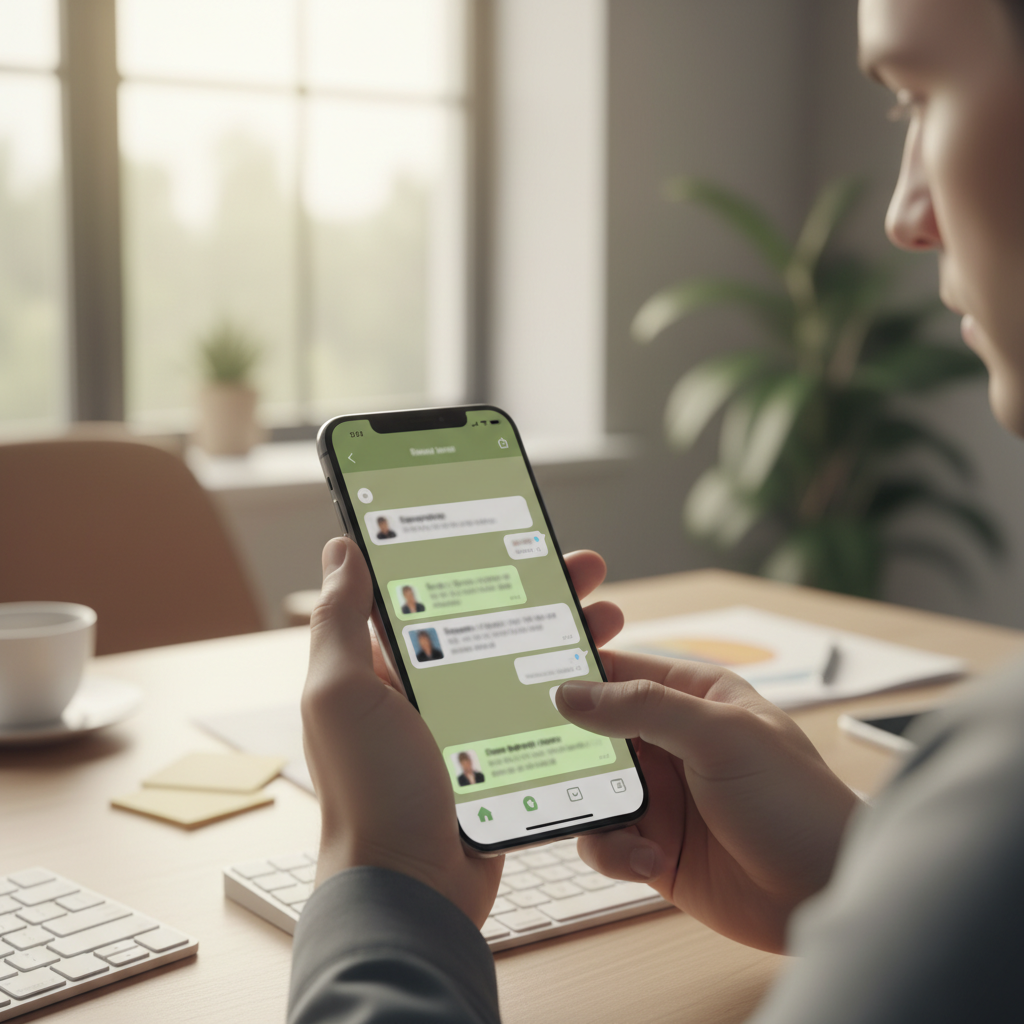
For many companies, the concept of "texting" is no longer limited to SMS or VoIP numbers: today, conversations with customers take place primarily on WhatsApp. In Italy, WhatsApp is the most used app for communication, making it the ideal channel for marketing, support, sales, and transactional notifications. The difference, however, lies in the way where you use it: Sending messages manually from a smartphone is limiting, poorly scalable, and poses a compliance risk.
With WhatsApp Business and a platform of marketing automation as SendApp, you can transform messaging into a measurable process: segmentation, approved templates, automations, AI chatbots, team assignment of conversations, reporting, and consent control. In this article, we'll look at how it works, which use cases deliver concrete results, and how to properly manage compliance.
What is “WhatsApp texting” for a business?
When we talk about “WhatsApp texting” in the business context we mean the ability to send and receive WhatsApp messages professionally, using a business number and tools designed to:
- Handle high volumes (campaigns, notifications, follow-ups)
- Automate responses and flows (bookings, leads, after-sales)
- Collaborate in teams (operators, departments, shifts)
- Integrate CRM, e-commerce, management and ticketing
- Measure performance and ROI
In practice, it's not just "writing on WhatsApp": it's building a conversational channel that combines marketing and customer care, with rules, traceability, and scalability.
How it really works: From WhatsApp Business App to APIs
WhatsApp Business App: Useful, but with limitations
The WhatsApp Business app is perfect for micro-businesses and basic management: catalog, quick replies, labels. But as contacts and requests increase, typical limitations emerge:
- Only one primary device (limited multi-user)
- Difficulty tracking team activities
- Reduced automation
- Complex integrations
- Risk of “artisanal” management of consents and lists
WhatsApp Business Platform (Cloud API): The Professional Level
For campaigns, automations and advanced management you need the WhatsApp Business Platform (often called “APIs”). With APIs you can:
- Send proactive notifications and messages with approved templates
- Manage conversations from multiple operators and departments
- Activate automatic flows (leads, reminders, abandoned carts)
- Connect WhatsApp to CRM and internal systems
- Use Conversational AI for answers and qualification
With SendApp Official You can access the official APIs and orchestrate sendings and automations without improvising.
Why WhatsApp Beats SMS for Marketing and Relationships
SMS still plays a role in some contexts, but WhatsApp offers decisive advantages for modern communication:
- Rich experience: images, videos, documents, buttons, catalogs
- Two-way conversation: the customer responds and you manage the flow
- Brand identity: company profile, name, information, reliability
- Advanced Automation: chatbot, routing, tags, segments
- Measurability: conversational funnels and campaign performance
The key point is that WhatsApp is not just a “sending channel”: it is a conversion channel. And when you combine it with marketing automation and AI, you reduce operating costs and increase service quality.
High-impact use cases (with Italian examples)
1) Marketing and promotions: campaigns that generate real sales
Imagine an online clothing boutique in Milan that wants to promote its new spring collection. With WhatsApp, it can send a personalized message to specific segments (e.g., "customers who have purchased summer clothing in the last 12 months" or "users who requested information but did not complete their order").
Practical example:
- Segment: VIP customers (spending > €250)
- Message: collection preview + dedicated discount code
- CTA: “See items” button that leads to a page or catalog
- Automatic follow-up after 24 hours if they don't click
With SendApp you can create flows that manage sending, replying, automatic tagging (“interested”, “requires size”, “wants return”) and handover to an operator when needed.
2) Lead generation and qualification: from the ad to the quote in chat
Many Italian companies invest in Meta Ads and Google Ads, but lose leads because response times are slow. WhatsApp reduces friction: the contact enters the chat and the company can qualify immediately.
Practical example (window and door studio in Bologna):
- The user clicks on “Contact us on WhatsApp” from the ad
- An automatic flow asks: city, type of intervention, size, times
- If the lead is “hot”, it is assigned to the salesperson
- The system automatically sends a reminder if the quote is not accepted within 3 days
Here conversational AI makes the difference: not only quick answers, but structured data collection and intelligent routing.
3) Customer care: fewer tickets, more satisfaction
An Italian cosmetics e-commerce site receives daily inquiries about shipping, returns, and product availability. With WhatsApp and automation, you can resolve a huge portion of these inquiries without human intervention.
Practical example:
- The customer writes “Where is my order?”
- The bot asks for the order number or recognizes the customer
- Retrieves the shipment status from the management system and responds
- If delivery is late, it offers options: refund, replacement, priority
With a AI chatbot You can handle natural language, variable FAQs, and complex cases with operator escalation.
4) Transactional notifications: useful, timely, non-invasive
WhatsApp is perfect for "service" messages that customers appreciate: order confirmations, appointment reminders, payment statuses, and documents. These are high-value communications that reduce no-shows and repeat requests.
Practical example (medical center in Rome):
- Confirm booking + “Add to calendar” button”
- 24-hour reminder + “Move appointment” option”
- Send pre-visit instructions (PDF) and location
Typical result: fewer calls to voicemail and fewer missed appointments.
5) Cart recovery and customer reactivation: automations that increase LTV
Many Italian e-commerce sites have abandoned carts and customers who purchase once and then disappear. With WhatsApp, you can create a respectful and effective reactivation cycle.
Practical example (supplement shop in Turin):
- Abandoned cart: message after 1 hour with summary and assistance
- If no response: after 24 hours light incentive (free shipping)
- Post-purchase: 14-day follow-up “How are you doing?” + cross-selling
The winning logic is conversational: no “spam”, but rapid support and advice.
Conversational AI on WhatsApp: What's Really Changing
AI on WhatsApp isn't just there to "answer for you." If designed well, it can be a driver of efficiency and growth:
- Reduces response times (even outside of hours)
- Lead qualification with guided questions and natural language
- Collects intentions (quote, assistance, returns, availability)
- Sort towards the right department or operator
- Support operators suggesting answers and next actions
With SendApp, you can integrate an AI agent that maintains your brand identity, manages FAQs and processes, and passes the conversation to a human when necessary. Recommended approach: start with 10-20 FAQs and 3-5 high-volume flows (shipments, appointments, quotes), then expand.
Compliance and Best Practices: How to Do It "The Right Way"“
When it comes to business messaging, compliance isn't a minor detail: it's what protects reputation, deliverability, and trust. To work effectively on WhatsApp Business, consider these pillars:
Consent and transparency
- Collect clear consent (opt-in) for promotional communications
- Explain what you will send and how often
- Always offer an easy way to stop communications
Segmentation and relevance
Sending the same message to everyone is the fastest way to increase blocks and reports. Segment by interests, purchase history, geographic area, and relationship level (lead vs. customer). The more relevant the message, the higher the conversion and satisfaction.
Proactive templates and messages
For company-initiated messages (e.g., notifications and campaigns), it's essential to use templates that comply with platform policies. Design useful, clear, and action-oriented templates: confirmations, reminders, updates, and truly relevant offers.
Operational Management: Roles, Logs, and Quality
A team needs control: who responds, how quickly, and with what outcome. A platform like SendApp helps maintain quality standards, assign conversations, and analyze performance (average time, response rate, and conversions per campaign).
Ready-to-use strategy: a WhatsApp funnel in 7 days
If you want to get started quickly, here's a concrete outline (adaptable to retail, services, and e-commerce):
- Day 1: Activate WhatsApp Business with API and set tags/segments
- Day 2: create 3 templates (welcome, promo, reminder)
- Day 3: connect site/landing and enable click-to-WhatsApp
- Day 4: Build a lead qualification flow (3-5 questions)
- Day 5: activate a post-sales flow (tracking + FAQ)
- Day 6: Integrate an AI chatbot for FAQs
- Day 7: launch a segmented micro-campaign and measure results
The secret is iteration: a few well-crafted flows, measured and improved every week.
Common mistakes to avoid
- Using WhatsApp as an indiscriminate broadcast: increases blocks and reduces confidence
- Slow responses: on WhatsApp the expectation is “almost immediate”
- No human passage: AI must escalate when needed
- Messages without context: always referring to an order, request or interest
- Don't track KPIs: without data you don't know what works
KPIs to monitor to understand if WhatsApp is performing
- Response rate and average first response time
- Conversion rate from chat to purchase/booking
- Ticket reduction by email/phone
- Customer satisfaction (CSAT) post-interaction
- Revenue per campaign and average order value (AOV)
With an automation platform, these indicators become readable and optimizable, instead of remaining team “feelings.”.
How SendApp can help you
SendApp offers complete solutions to manage WhatsApp Business professionally and efficiently:
- SendApp Official – Official WhatsApp Business API for bulk sending and automation
- SendApp Agent – AI chatbot with integrated ChatGPT for intelligent automatic responses
- Request a free consultation – Talk to an expert to find the ideal solution