
Why we're talking about "VoIP texting" today (and what does WhatsApp Business have to do with it)
In recent years, many companies have started using VoIP numbers to manage calls and support: cloud-based switchboards, geographic numbers, virtual lines, and smart working. This is where the concept of VoIP texting: the ability to send and receive messages (typically SMS) using a messaging-enabled VoIP number, instead of a traditional SIM.
But in 2025, if the goal is do marketing, automate conversations And improve customer experience, the real question is not “can I send SMS from a VoIP number?”, but rather: What is the most effective and comprehensive channel for business conversations?
In Italy, the answer for many companies is WhatsApp Business: a channel already present on almost everyone's phone, with richer conversations than SMS, the possibility of approved templates, automations, catalogues and above all integration with Conversational AI.
In this guide we will see:
- how messaging from “VoIP numbers” works and where it makes sense;
- the typical limitations of SMS/VoIP texting for marketing and customer care;
- why WhatsApp Business (with official API) is often the best choice;
- concrete use cases in Italy with automation and AI;
- How to set up a compliant and results-oriented approach with SendApp.
What is VoIP messaging (VoIP texting) in simple terms?
“VoIP texting” refers to sending and receiving messages using a VoIP number (therefore, a number managed via the Internet and not tied to a physical SIM card). In practice, the company maintains its own telephone identity (the number customers call) and, if that number is enabled, can also receive/send messages.
Technically, the text travels as data over the Internet to the messaging provider, and only at the final stage is it delivered to the recipient as an SMS (if the recipient is on a traditional mobile network). This makes VoIP messaging convenient for those who work from a PC, use CRM systems, help desks, or want to integrate automations.
VoIP texting vs. traditional SMS: What's the difference?
For the end user, often nothing changes: they receive a text message. For the company, a lot changes:
- Multi-device management: sending from the web, from CRM, from multiple operators.
- Automation: trigger capabilities (e.g. “order shipped”) and automatic flows.
- Scalability: mass mailings managed by platforms.
The problem is that SMS remains a "poor" channel“No interactive buttons, limited contextualization, difficulty managing long conversations, and often costs that increase with volume. For many companies, the natural progression is to move conversations to WhatsApp Business, keeping SMS as a backup channel.
Why WhatsApp Business Often Outperforms SMS (Even from a VoIP Number)
If you're considering VoIP messaging for marketing or customer service, it's helpful to compare what you get with SMS versus WhatsApp Business.
1) Richer and more “human” conversations”
WhatsApp allows:
- longer, more natural messages (without character anxiety);
- images, documents, videos, voice notes;
- buttons and calls-to-action (where provided), to guide the user;
- catalogs and showcases for eCommerce and retail.
For an Italian brand, this means being able to do customer experience, not just “notifications”.
2) Automations and “serious” marketing automation”
With WhatsApp Business and a platform like SendApp, you can build automated workflows: cart recovery, post-purchase follow-up, appointment reminders, onboarding, NPS, and customer reactivation. SMS can do this to a more limited extent; WhatsApp makes it more effective because the conversation is continuous and contextual.
3) Conversational AI: from “message” to “dialogue”
The leap in quality comes when you combine WhatsApp with a AI chatbot Able to understand requests, respond coherently, and hand over to an operator when needed. With conversational AI, you can:
- reduce response times;
- manage peaks (sales, campaigns, post-TV commercial requests);
- qualify leads before sales contact;
- support customers 24/7 without increasing your team.
Learn more about the AI part here: AI Chatbot for WhatsApp.
Practical Use Cases (Italy): When to Use WhatsApp Instead of VoIP Texting
Below you'll find concrete examples designed for Italian companies. In many scenarios, SMS from VoIP can be a useful channel, but WhatsApp Business (with official APIs) is becoming the primary channel for conversions and engagement.
Marketing and promotions for retail and eCommerce
Scenario: An online clothing boutique in Milan that wants to promote its spring collection and increase repeat purchases.
SMS/VoIP approach: Sending a text with a link to the landing page works, but it's not very distinctive and doesn't handle questions well ("What size do you recommend?", "Do you have cream?").
WhatsApp approach with SendApp:
- segmentation: “customers who have purchased in the last 90 days” + “interest: female”;
- message with personalized invitation and link to the catalog;
- if the user answers “size recommendation”, they enter an automatic flow that asks for their height and preferred fit;
- Conversational AI that suggests products and handles objections;
- handover to operator for complex requests or upsells.
Typical result: more useful conversations and less “cold” traffic to the site.
Appointment reminders for medical practices and beauty salons
Scenario: Beauty salon in Bologna with a full schedule and many last-minute cancellations.
WhatsApp approach: Automatic reminder 48 hours in advance + message 4 hours in advance with "Confirm" / "Move" buttons. If the user chooses "Move," the AI suggests 3 alternative slots and updates the reservation (or passes it on to the operator).
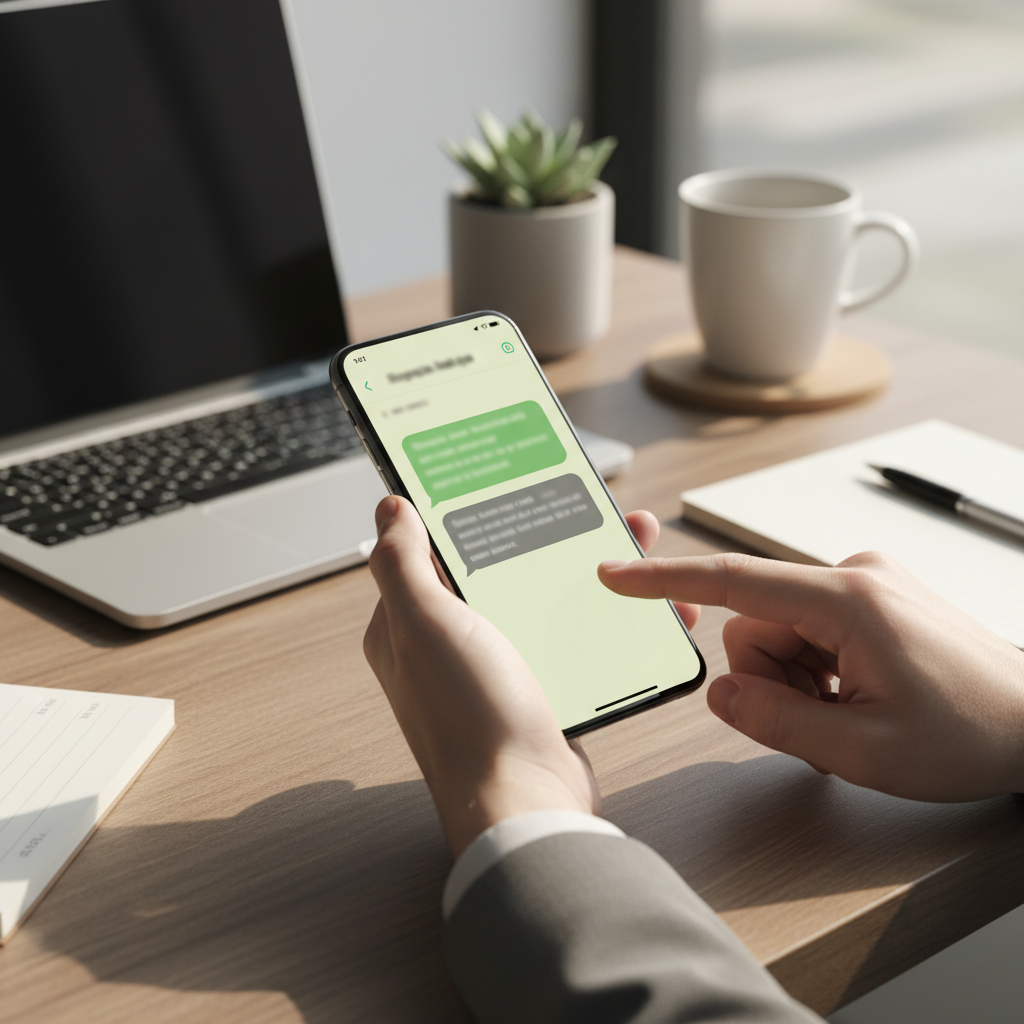
In this case, SMS remains useful as a backup for those who don't use WhatsApp, but the primary management on WhatsApp reduces no-shows and lightens the voicemail.
Customer care for local utilities and services
Scenario: Boiler maintenance company in Turin that receives repetitive requests (costs, availability, documents, warranty).
Recommended automation:
- initial menu: “Estimate”, “Assistance”, “Documents”, “Intervention status”;
- AI that answers FAQs and collects data (address, model, urgency);
- ticket creation and assignment to technician;
- Automatic notifications: “technician arriving”, “intervention completed”, “payment”.
This type of flow is much more natural on WhatsApp than a chain of SMS.
Lead generation and qualification for real estate agencies
Scenario: Real estate agency in Rome that receives contacts from portals and social media campaigns.
WhatsApp Flow with AI: Within 60 seconds of the lead, a welcome message and 3 questions (region, budget, timing) are asked. The AI classifies the lead (hot/warm/cold) and suggests an appointment. The agent only engages with qualified leads.
Here, the speed and quality of the conversation make the difference: an SMS can initiate contact, but WhatsApp turns it into a negotiation.
How a "well-done" project works: numbers, official APIs and flows
When a company starts with a VoIP PBX or a "historic" business number, the frequent question is: "Can I use the same number for WhatsApp?" It depends on the technical constraints and the current setup, but the strategic objective is clear: consolidate the brand identity and offer a reliable conversational channel.
Official WhatsApp APIs: Why They Matter
To do marketing automation and support at scale you need the Official APIsTemplate management, delivery quality, scalability, multi-operator, integrations. With SendApp, you can start from here: Official WhatsApp APIs.
Automation: From Broadcast to Customer Lifecycle
A common mistake is using WhatsApp only for bulk emails. It works best if you include it in your email lifecycle:
- Acquisition: lead magnet, click-to-WhatsApp, referral.
- Conversion: follow-up, quotes, cart recovery.
- Retention: after-sales, reordering, membership.
- Assistance: FAQ, ticketing, escalation.
Each stage can be automated with rules, tags, segments, and dynamic messages.
Compliance and best practices (marketing and messaging)
Whether you send SMS from a VoIP number or WhatsApp messages, compliance isn't a detail: it's part of performance. Clean lists and clear consent improve deliverability, reputation, and results.
Consent and transparency
- Collect explicit and verifiable consent for marketing communications.
- Explain what type of messages you will send and how often.
- Always offer an easy way to opt out.
Segmentation and relevance
Sending everyone the same message is the fastest way to increase blocking and unsubscriptions. It's best to segment by:
- purchase history;
- interests;
- geographic area (useful for local businesses);
- funnel status (lead, customer, inactive).
Quality of conversation
With WhatsApp, users expect dialogue, not spam. Therefore, conversational AI must:
- respond consistently and with a “brand-safe” tone;
- ask for clarification when necessary;
- hand over to an operator in sensitive cases;
- record context and preferences.
Recommended strategy: SMS (including VoIP) as backup, WhatsApp as primary channel
In many companies the best combination is:
- WhatsApp Business for conversations, automations, upsells and support;
- SMS (even via VoIP numbers) as a fallback channel for critical notifications or unreachable users on WhatsApp.
This way you reduce conversational costs, increase marketing effectiveness and maintain broad coverage.
Full flow example (Italy): restaurant with delivery and reservations
Scenario: Restaurant in Naples with reservations, takeout, and delivery.
Objective: Increase weekday bookings and reduce callbacks.
Flow with SendApp:
- Segment-based WhatsApp campaign (customers who ordered at least twice): "tasting menu from Monday to Thursday" promo.
- User response: “I would like to book.”.
- AI bot: asks for date, time, number of people, allergies; suggests two alternatives if full.
- Automatic confirmation + reminder 3 hours in advance.
- After dinner: review request + 30-day return coupon.
This is real marketing automation: not just sending, but managing the end-to-end experience.
How SendApp can help you
SendApp offers complete solutions to manage WhatsApp Business professionally and efficiently:
- SendApp Official – Official WhatsApp Business API for bulk sending and automation
- SendApp Agent – AI chatbot with integrated ChatGPT for intelligent automatic responses
- Request a free consultation – Talk to an expert to find the ideal solution